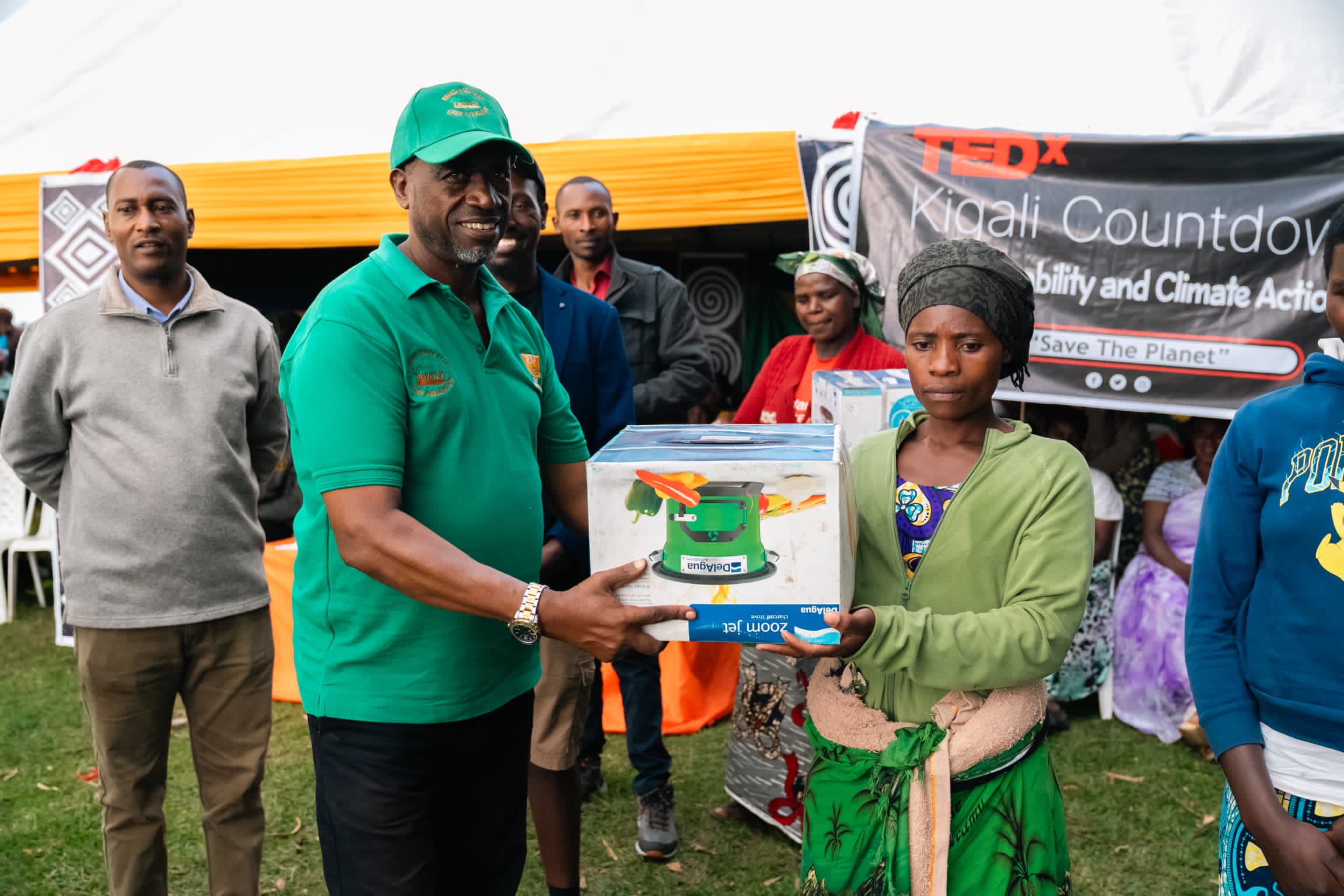
A total of 150 families living near Gishwati-Mukura forest in the Kigeyo, Mushonyi, and Nyabirasi sectors of Rutsiro district, have received significant support aimed at helping them preserve the park.
The event of supporting these residents was organized with the help of Kivu Belt Village Tours, a community based company that collaborates with Rwanda Development Board.
The assistance they received includes 150 environmentally friendly stoves and 30 solar panels for residents of Nyabirasi, a community yet to be connected to electricity.
The initiative coincided with tree planting efforts within the park, and residents were encouraged to understand the importance of the forest for the fresh air they breathe, as well as their role in protecting this valuable natural resource.
Residents who received stoves vowed to stop cutting down trees in the park for firewoods, ensuring that the forest is preserved for future generations.
Zacharie Nsengiyumva, one of the beneficiaries, explained that the stove would help reduce the amount of charcoal used, as she previously had to venture into the park to collect firewood.
“With this stove, I will reduce the quantity of charcoal that I have been using, and I will no longer need to go into the forest. The forest will thrive, and I won’t return to harm it,” he said.
Rachel Nyiranizeyimana from the Kigeyo sector also expressed her appreciation, noting that she would now use less charcoal and avoid sending children into the forest to gather firewood.
“Based on what we were told, I will use less charcoal, and it will keep us from sending children into the forest to collect firewoods,” said Nyiranizeyimana.
Sadam Hussein Cyiza, the Director of TEDD Kigali, which provided the support, noted the importance of these stoves in reducing charcoal use, which in turn helps preserve the forest’s air quality.
“The stoves you have received reduce charcoal consumption by 70%. This means fewer trees are being cut down, and the clean air you once enjoyed will be preserved,” he said, emphasizing that reducing charcoal use is crucial to combatting air pollution caused by vehicle emissions and other harmful sources.
He added that in addition to preserving the environment, these stoves are also seen as a way to improve public health, including prevention of diseases caused by the burning of firewoods and saving time for children who no longer need to go searching for firewoods, allowing them more time for studying.
Abdul Rahaman Karemera, the National Coordinator for the forest value chain, also spoke to the significance of trees in daily life, illustrating that Europeans come to Rwanda specifically for seeking fresh air, and some even spend months in Rwanda’s forests to enjoy the clean air.
“You see foreigners coming here; they save money all year and, when the time comes, they come to Africa, especially to Rwanda, because of the beautiful forests where they can breathe fresh air,” said Karemera.
Norbert Karagire, the deputy park manager responsible for liaising with surrounding communities, urged residents not to destroy the park’s forest.
He believes that the stoves will provide a solution to the challenges the park faces, especially those related to people seeking livelihoods through forest resources.
He concluded by emphasizing that people living near the park should continue to protect the forest, and warned those planning to harm the park for firewoods or other resources to reconsider, as the stoves will significantly help with their needs.
Gishwati-Mukura National Park, which began receiving tourists in 2020, is rich in waterfalls, various species of trees and plants, and wildlife, including monkeys, antelopes, and birds, among others.